
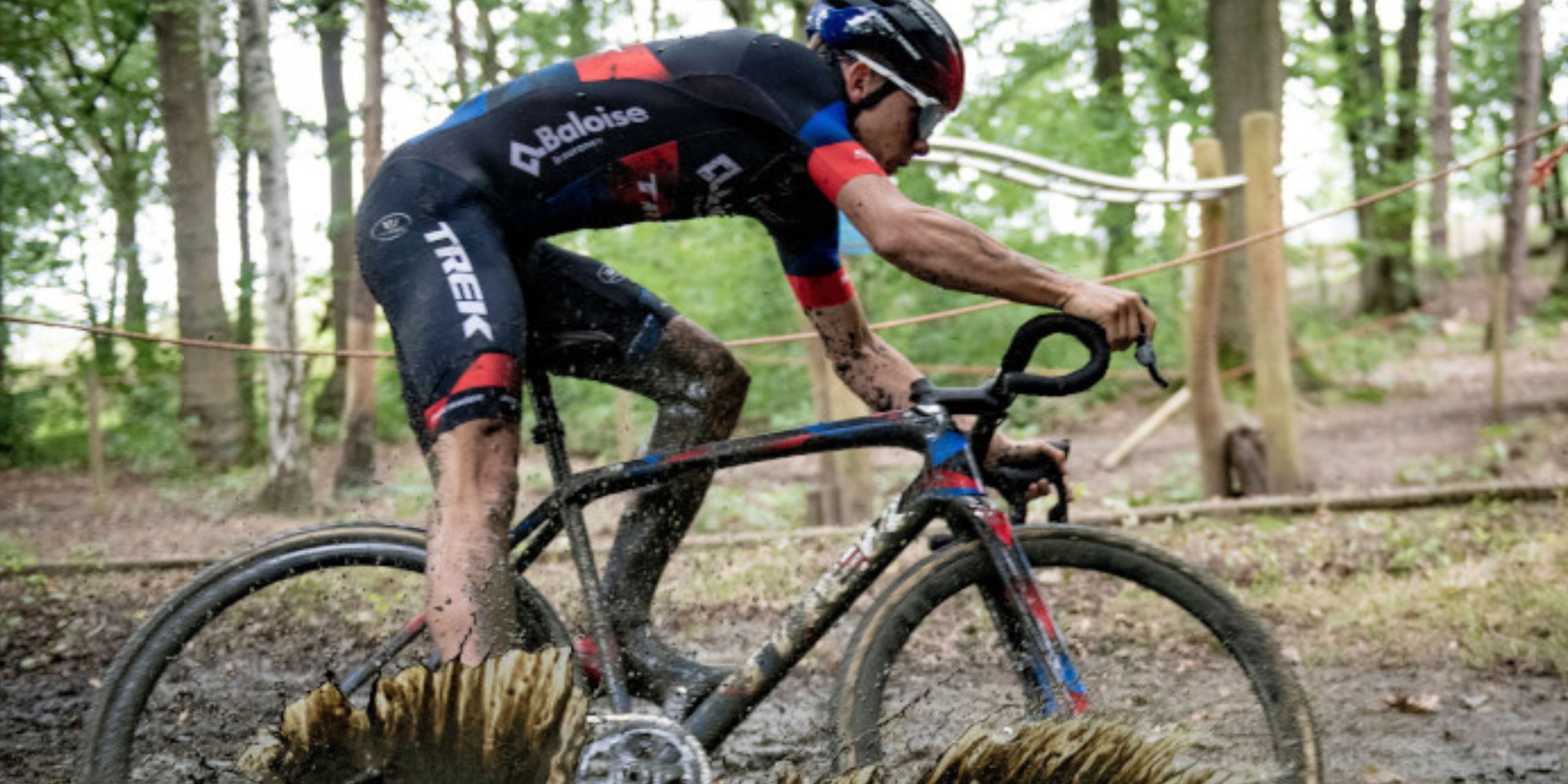
Cyclocross season is here. But what is it, what type of bike and equipment do you need, and how can you join in? We’re here to answer all your questions so read on for the essential lowdown on this autumn-winter sport.
What is cyclocross?
Cyclocross – often abbreviated to “CX” – sees riders competing on technical outdoor courses of grass, dirt, mud, sand… even snow. There are usually plenty of natural features to negotiate, like roots and rocks, as well as man-made hurdles. You may have to dismount and carry your bike if the going gets too rough or too muddy, or if your bunny hop isn’t up to the challenge.
Cyclocross was invented by French road cyclists as a way of keeping fit in the off-season and it’s particularly popular on the continent – especially Belgium and the Netherlands – with a growing scene in the UK. There’s an annual UCI World Cup series that’s massively popular with spectators who brave the cold in woolly hats that have become part of the unofficial uniform of the CX fan.
In CX, competitors complete as many laps as they can of a course that’s typically 1km to 3km long, plus a final lap, and races typically last 40 to 60 minutes. With riders dressed in lycra and perched on dropbar bikes, at first glance a CX race might look like a road race that took a wrong turn. However, there’s a distinct set of skills and gear needed for this discipline.
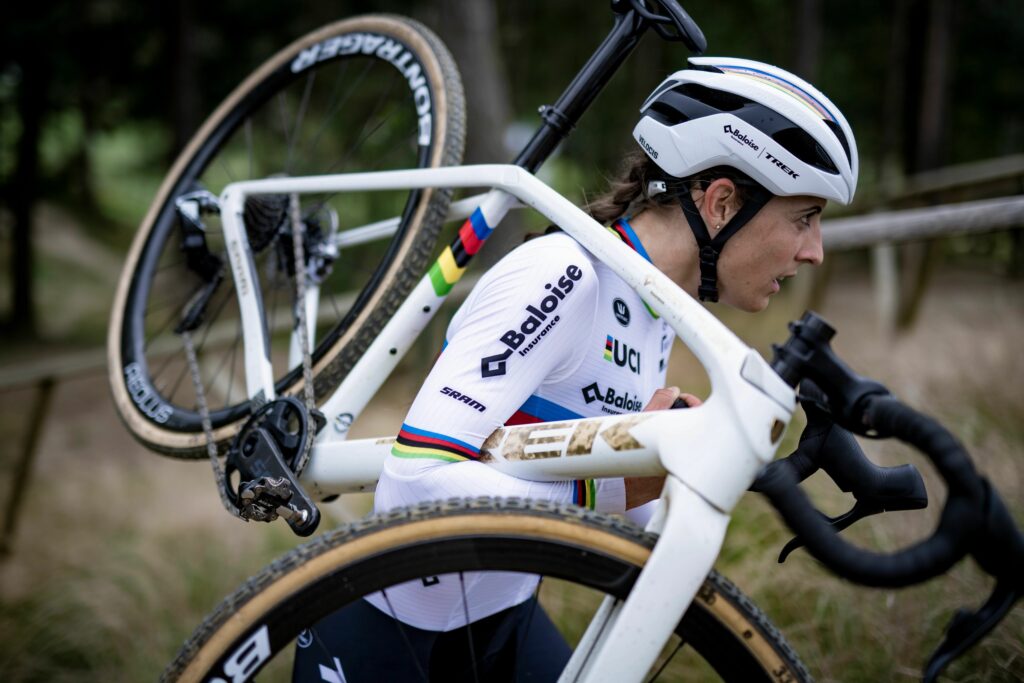
What bike do I need?
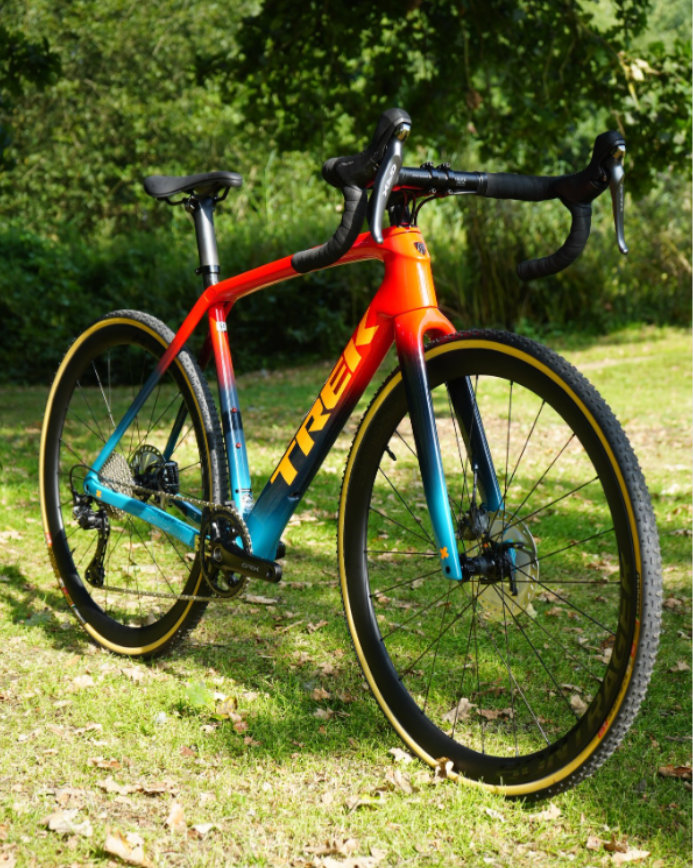
Trek Boone is a hugely popular CX bike and, although it is available as a full build Trek Boone 6, we find that customers like to go for custom builds based on Boone Framesets such as this one in smoke black lithium grey and this one in red to navy teal fade.
Once you’ve chosen your frame, tyres are one of the most important decisions you’ll need to make. These are our favourite tyres for CX at regional level; Challenge Limus for dry weather and
Challenge Grifo for wet weather. It’s important to note that 33mm tyres are the limit for UCI level races and these two tend to come up bigger than that when inflated. So, for national level racing we recommend the pro versions of both these tyres, Grifo Pro and Limus Pro. We also love Vittoria Terrano tyres which are available as wet, dry and mixed options.
Setting the right tyre pressure – the Wyman formula
One of our top tips for starting out in cyclocross is to get your tyre pressure right. If you’re a roadie who’s never waded through sludge on a mountain bike in winter you might not be used to running lower pressures for better grip. Getting your tyre pressure right offers improved handling, more comfort and superior cornering while also protecting your rims and preventing unnecessary flat tyres. We recommend following Helen Wyman’s formula.
Helen’s method for setting up her tubular CX tyres is to take your weight in pounds, divide it by 10, and then add five. So for example, if you weigh 170 lbs, divide it by 10 to get 17 and add five to get 22 PSI.
What else do I need?
To get your tyre pressure right, you’ll need an accurate tyre pressure gauge, like this pocket-sized Pressure Gauge from BBB. This cordless inflator from Makita is also handy for quick inflation and saving your arms. This battery pressure washer from Worx is great for mid-race and post-race cleaning.
How do I get involved?
If you’d like to give cyclocross a try, we recommend joining in a training session to begin with. There’s a good local scene and training sessions are on offer from VC Deal for members on Wednesday evenings. Find out more about joining here. These training sessions at Herne Hill Velodrome are very good and only 40 minutes away.
In terms of competing, the East Kent CX League holds regular local races, with entry via British Cycling, and slightly further afield the London and South East Cross League has many races in Kent. For more information and links to entry once open, take a look at this page.


